Compute
- GPU-dense racks for training and inference
- CPU capacity for everything around the model
- Edge nodes at the point of use

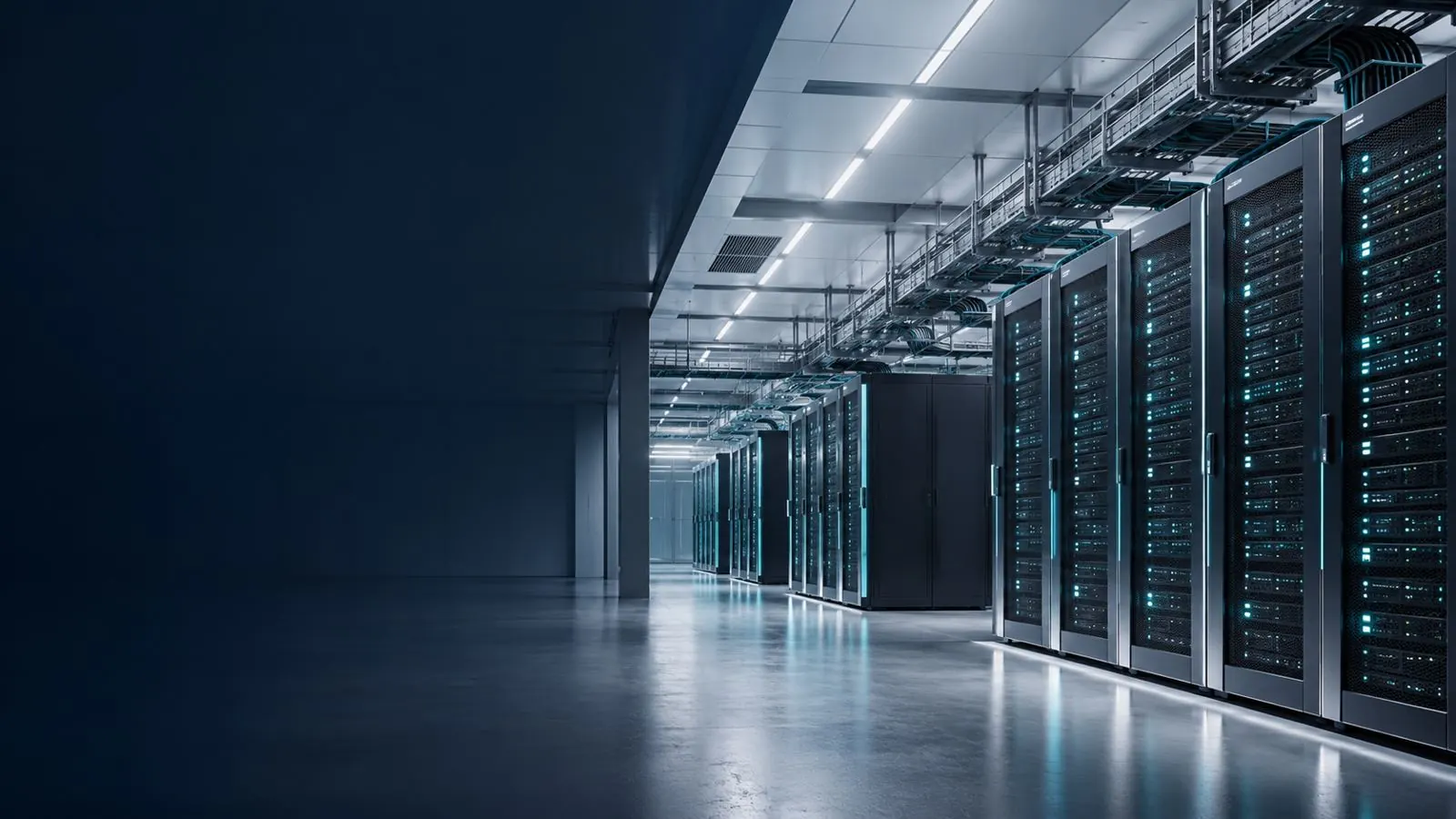
Dependable compute, engineered as a unit and placed close to the businesses that use it.
Not every business belongs in a hyperscale cloud. AlteGen is developing small, modular data centers that put dependable compute within reach of the businesses that need it most.
Development is underway.
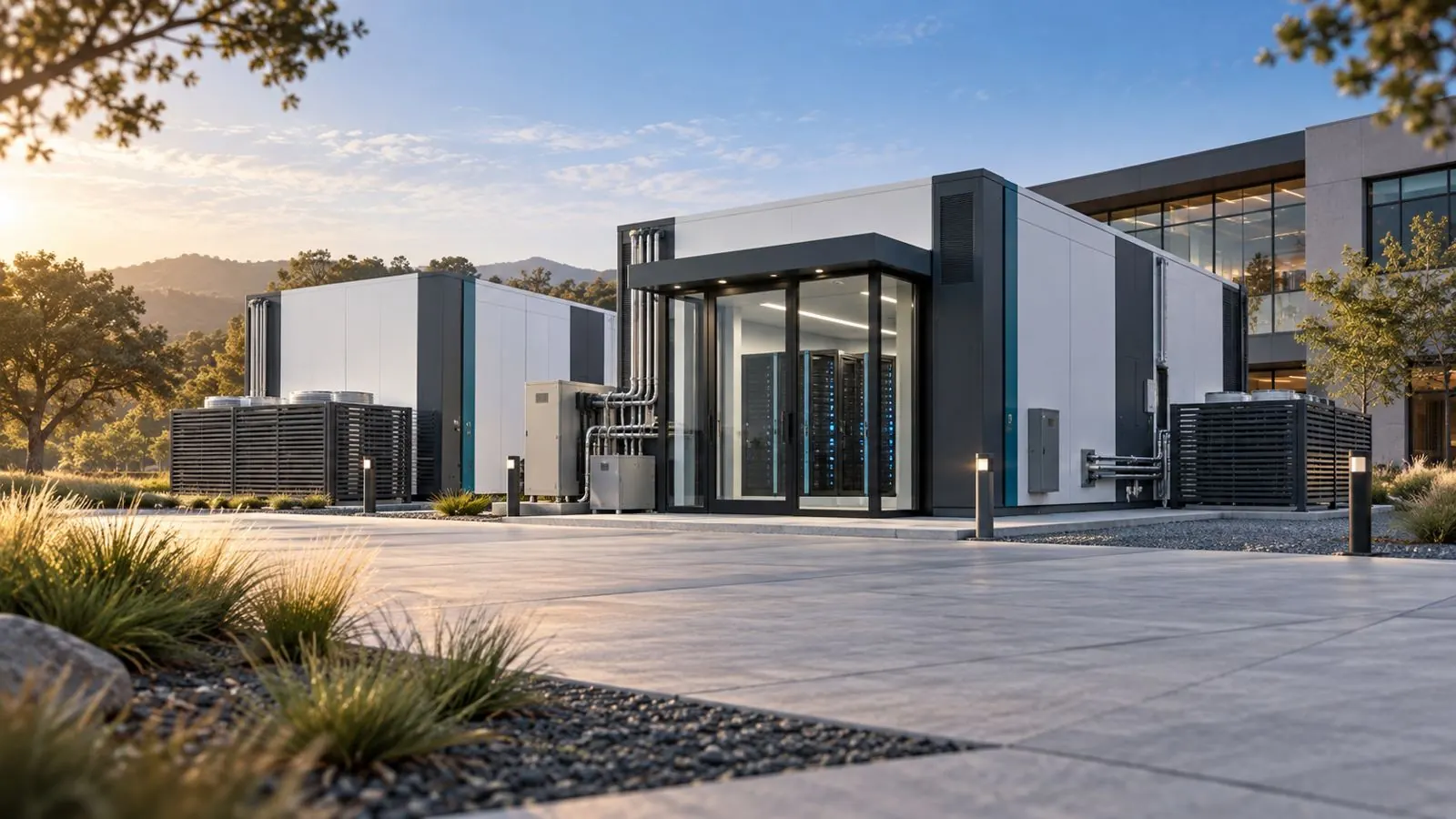
| Form factor | Containerized or prefabricated enclosure, delivered and commissioned on site |
|---|---|
| Capacity | A small number of racks sized for GPU-dense workloads, expandable by adding units |
| Cooling | Liquid or rear-door cooling selected for the local climate and power budget |
| Power | Grid connection with on-site backup; site selection prioritizes available capacity |
| Location | Selected by customer demand and power availability |
Built for the workload a business actually has, with room to grow by adding units rather than overbuilding on day one.
Compute, storage, network, power and cooling, built into a single prefabricated unit and monitored rack by rack.
Illustrative. Target design, in development. Hover or tap a system to highlight it.

Close to the workCompute belongs near the robots, machines, and people that use it.
The technologies AlteGen is designing around, and why each one matters for a small facility that has to perform like a large one.
Modern AI accelerators produce more heat than air can remove efficiently. Direct-to-chip liquid cooling moves coolant through cold plates on the processors themselves; immersion cooling submerges whole servers in a non-conductive fluid. Both allow far higher rack density and cut cooling energy substantially.
A single rack can now hold the compute that filled a room a decade ago, drawing tens to over a hundred kilowatts. Designing for this density from the start — power delivery, floor loading, cooling — is what makes a small facility viable.
Training and large-model inference depend on how fast GPUs talk to each other. High-bandwidth fabrics such as NVLink within a server and InfiniBand or RDMA over Ethernet between servers let a handful of racks behave as one machine.
Building the unit in a factory — structure, electrical, cooling, cabling — and delivering it complete cuts months from site construction and makes every unit consistent and tested before it arrives.
Grid connection backed by battery storage and, where practical, on-site generation. Batteries also allow a facility to draw less from the grid at peak hours, reducing both cost and the size of the connection needed.
Running trained models on compact hardware at the point of use — a factory line, a fleet of robots, a clinic — so decisions are made in milliseconds without depending on a distant data center.
Hardware-based isolation that keeps data encrypted even while it is being processed, so sensitive workloads can run with cryptographic assurance that no one, including the operator, can read them.
Sensors on every rack, circuit, and cooling loop feed monitoring software that predicts failures, balances load, and tunes cooling in real time — the same kind of automation the hyperscalers use, scaled down to a few racks.
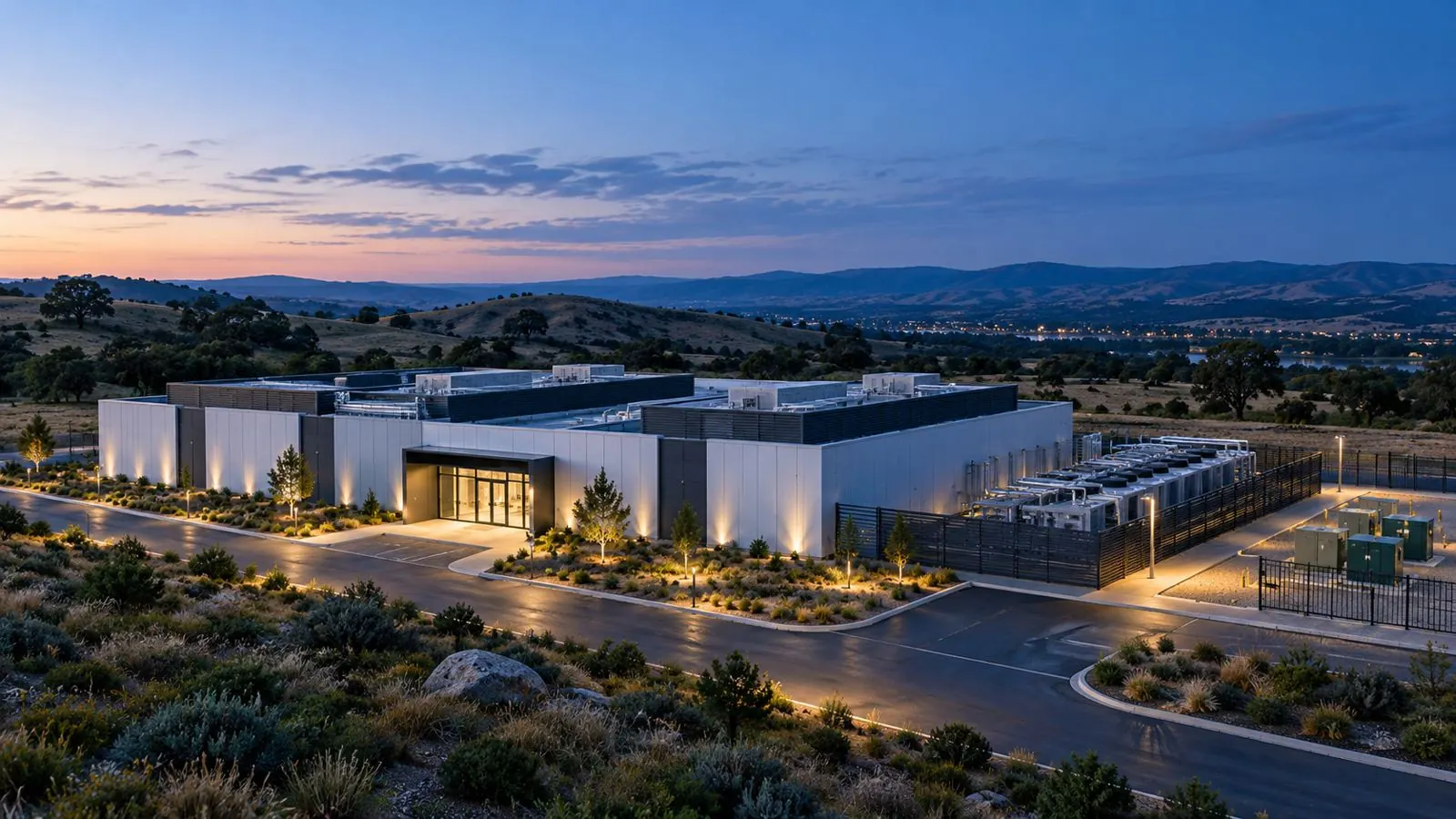
A small facility built from standardized, prefabricated units — each with its own compute, power, cooling, and network — that can be delivered to a site and expanded by adding units. It provides data center reliability at a fraction of the size of a hyperscale campus.
Most businesses do not need thousands of racks; they need a few, working reliably, near the machines and people that depend on them. Proximity removes latency, keeps sensitive data on the premises, and keeps operations running when the wide-area connection does not.
Businesses that run AI in the physical world: robotics companies, manufacturers, logistics operators, healthcare and research institutions, and technology companies moving from prototype to production.
Milpitas, California, in the heart of Silicon Valley.
Leave your details through the contact form. Partners, suppliers, and businesses interested in the program are welcome to reach out.